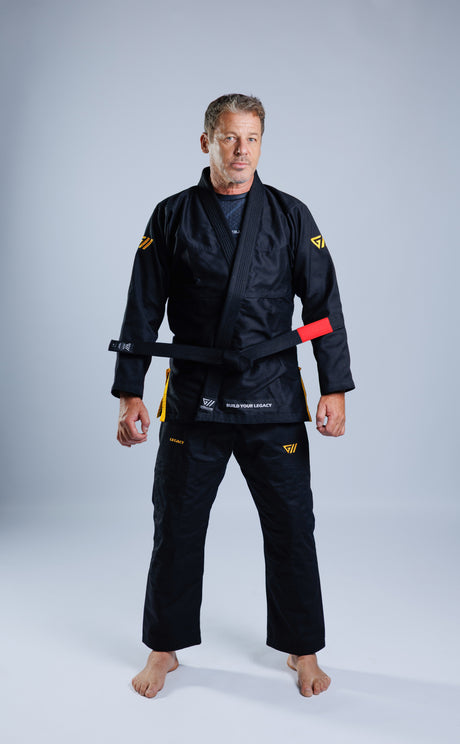
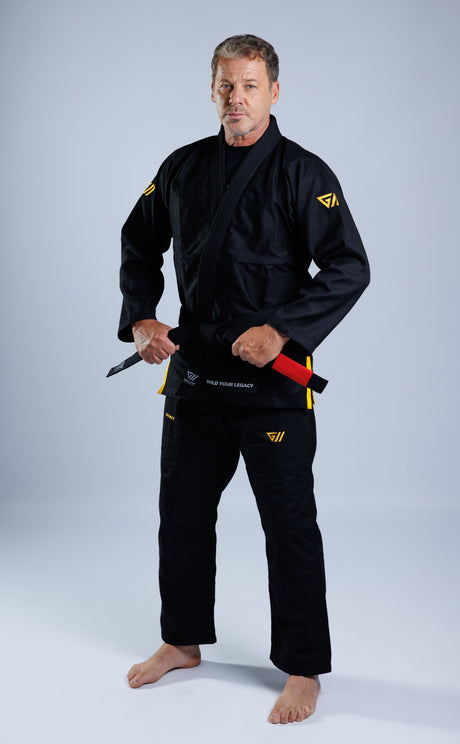
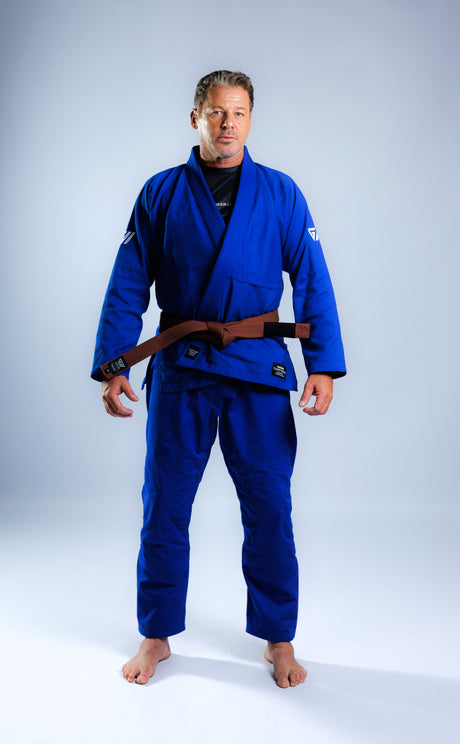
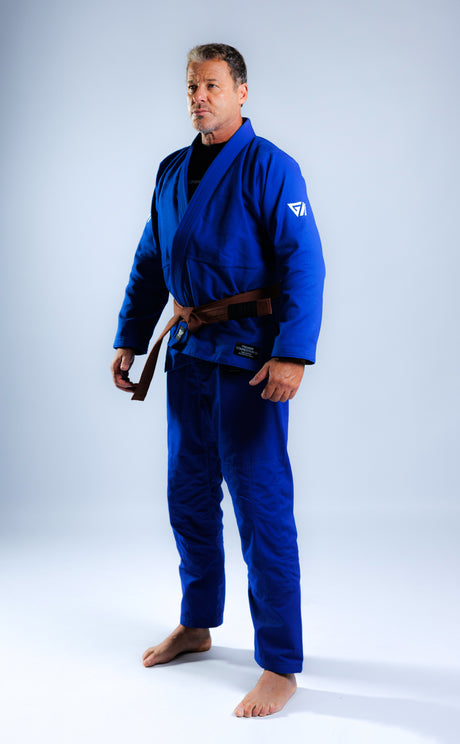
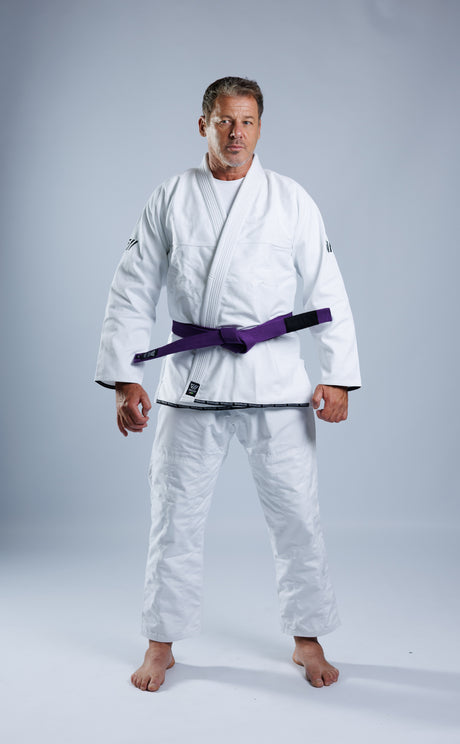
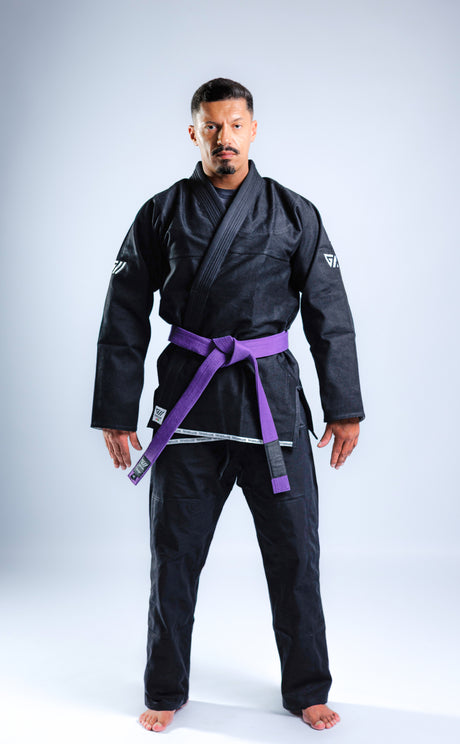
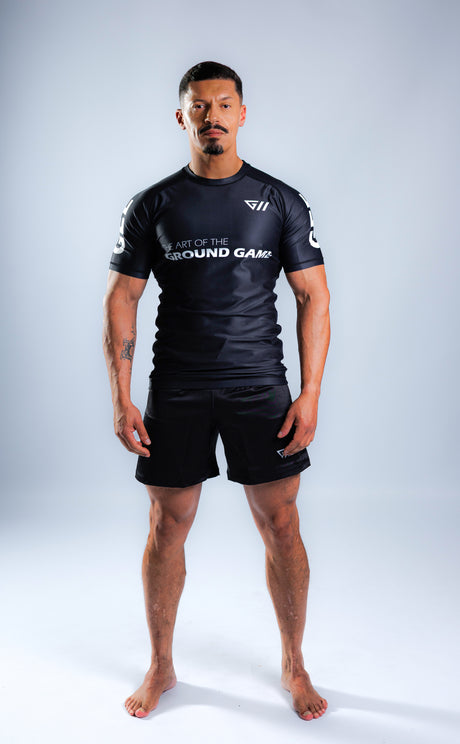
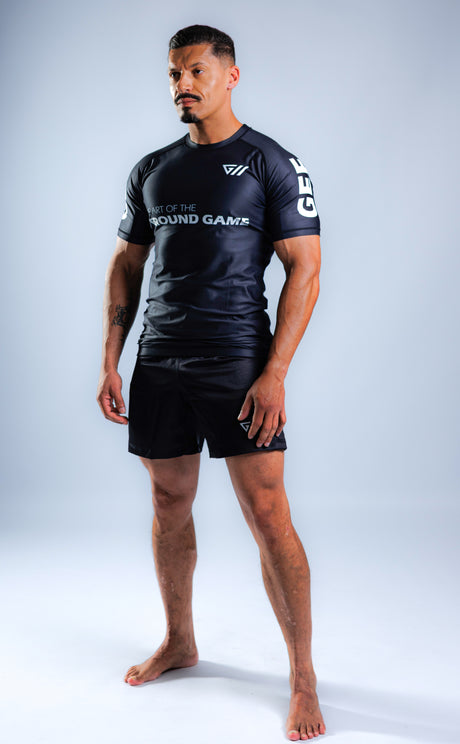
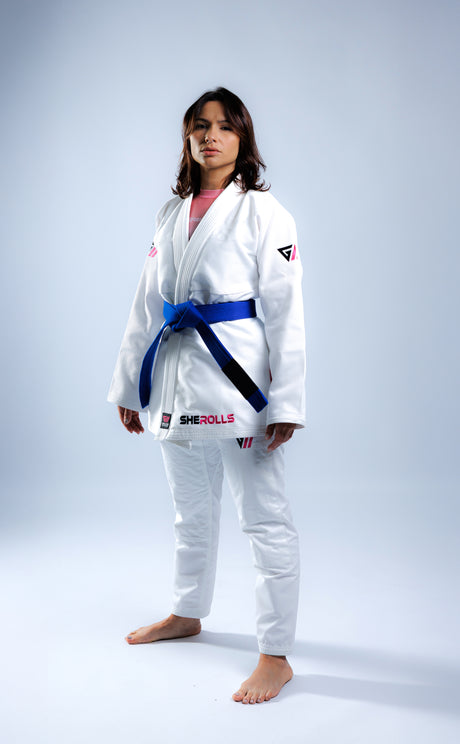
Purchasing your Brazilian Jiu-Jitsu (BJJ) Gi isn't just buying a uniform; it's a foundational investment in your martial arts career. This essential piece of gear directly impacts your comfort, your performance, and how long you stay on the mats. But let's be real, the market is a minefield of brands, weaves, weights, and confusing cuts. It’s ridiculously easy for both white belts and even grizzled black belts to drop serious cash on the wrong gear.
Stop the madness! Avoiding these common, costly errors will ensure you get a Gi that feels like a second skin and lasts for years of hard rolls.
Here are the top 5 mistakes people make when buying a Gi:
1. Prioritizing Price Over Quality and Fit
We all love a bargain, but the absolute cheapest Gi is almost always a path to disappointment. Ultra-low-cost options cut corners on the three things that matter most: weave quality, stitching durability, and the precision of the cut.
- The Durability Trap: That super-cheap Gi is likely made with thin cotton and zero reinforcement in high-stress zones (think armpits, knees, and vents). It's going to rip, shrink into a toddler's pajamas after one wash, and force you to buy a replacement way sooner. You didn't save money; you just paid twice.
- The Comfort Issue: Poorly made Gis are often stiff, scratchy, and distractingly uncomfortable. A quality Gi is softer, lighter, and actually moves with you on the mat, not against you.
- The Fit Fallacy: A cheap Gi usually has a generic, baggy, box-like cut. BJJ Gis are sized specifically (A0, A1, A2, etc.) to fit closely. The goal is to minimize grips. A poorly-fitting Gi hands your opponent free grips on a silver platter and might even get you disqualified in competition.
The solution? Ditch the impulse buy. Invest in a reputable brand and prioritize a comfortable, athletic cut that actually matches your body type, even if it means shelling out a little more up front.
2. Ignoring the Gi Weave and Weight
The weave—how those cotton threads are locked together—and the overall weight are game-changers. They impact how hot you get and whether you can actually make weight for a tournament. Many beginners just grab the first jacket they see without a second thought.
- Single Weave: Lightest and cheapest. Good for brutal summer heat, but less durable and gives opponents an easier grip.
- Double Weave: Heavy, thick, and tough as nails. Makes gripping a nightmare for your opponent, but you'll feel like you're rolling in a sauna suit. Often too heavy for competition weigh-ins.
- Pearl Weave (The Gold Standard): This is your bread and butter. It nails the perfect trifecta—it's light enough for competition, incredibly durable, and has that textured, grippy surface that makes it famously hard for opponents to maintain a firm hold. Gee BJJ Options
- Gold Weave: An older, super heavy-duty weave that shrinks a ton and can be bulky.
The Mistake: Buying a heavy Double Weave Gi when you live somewhere tropical, or choosing a flimsy Single Weave when you're training five times a week and need serious durability.
The solution? Start with a medium-weight Pearl Weave. It’s the ultimate versatile choice for training, competition, and just about everything in between.
3. Forgetting About Shrinkage
Cotton shrinks. Period. This simple, overlooked fact is why many practitioners end up with a Gi that fits perfectly out of the bag but turns into a short-sleeved disaster after a few wash cycles.
- Unsanforized vs. Pre-shrunk: Most good modern Gis are "pre-shrunk" or "sanforized" (chemically treated to minimize shrinkage). Even these will usually shrink a little, especially in hot water. Cheaper, "unsanforized" Gis? They can shrink a whole size or more.
- The Hot Wash Trap: Washing your Gi in hot water to kill bacteria or try to shrink an oversized jacket is a common rookie mistake that will absolutely destroy the fit.
The Mistake: Buying a Gi that is exact out of the box with zero allowance for shrinkage, or running a quality Gi through a hot wash and high-heat dryer.
The solution? Always buy a Gi that is slightly too long in the sleeves and pants. Commit to washing your Gi in cold water and hang-drying it to preserve the fit and maximize its lifespan.
If you’re training in hot weather, a lightweight gi is ideal.
See our Lightweight Gis Collection here.

4. Ignoring Academy or Competition Rules
That cool, neon-green Gi with the aggressive graphics?
It might be totally illegal where you train or compete.
- Academy Uniform Policy: Most BJJ schools are strict on color. White, royal blue, and sometimes black are the standard. Wild colors (red, green, purple) are often banned. Some schools require you to wear their specific patch or buy a Gi directly from them.
- IBJJF Regulations: If you plan on competing under the International Brazilian Jiu-Jitsu Federation (IBJJF), the rules are rigid. Your Gi must be white, royal blue, or black. They also have strict criteria for patch placement, cuff width, collar thickness, and fabric type. Your Gi can literally be disqualified at the weigh-ins if it doesn't meet their precise measurements.
The Mistake: Getting a flashy Gi only to find your professor requires a plain white one, or buying a jacket with a collar that's too thick for tournament compliance.
The solution? If you're a beginner, buy a plain white Gi. It is universally accepted everywhere. Always check with your instructor before you click "add to cart."
5. Failing to Understand Your Body Type and Cut
A BJJ Gi is not a t-shirt. They come in varying cuts, and different brands design for different physiques. A Gi tailored for a tall, skinny guy is going to look ridiculous on a shorter, muscular guy, even if they both wear "size" A2.
- Tapered vs. Boxy: Some brands offer an "athletic" or "tapered" cut that is narrower in the torso and arms. Others stick to the traditional, boxier cut.
- "L" Sizes: Smart brands now offer "L" (Long) sizes (e.g., A2L) for taller, slimmer practitioners, adding length without adding width to the jacket.
- "H" Sizes: Conversely, some have "H" (Husky/Heavy) sizes for shorter, wider individuals.
The Mistake: A shorter, heavier person buys a Gi from a brand famous for its tall, slim cuts, resulting in sleeves that are too long and a jacket that is too tight around the chest.
The solution? Skip the guesswork. Consult brand-specific size charts, read user reviews, and if you can, try on a teammate's Gi from the brand you’re looking at to understand how the cut fits your unique body geometry.