The choice of gi color in Brazilian Jiu-Jitsu (BJJ) is often a blend of personal preference, adherence to competition rules, and respect for the art's deep-rooted traditions. Unlike some other martial arts where color might strictly denote rank, in BJJ, the gi color is primarily regulated by context—specifically, whether you are training in the academy or competing on the mats.
The Big Three: Approved Gi Colors for Competition
For practitioners who plan to compete, the rules are clear and strict, primarily set by the two major international governing bodies: the International Brazilian Jiu-Jitsu Federation (IBJJF) and the Abu Dhabi World Professional Jiu-Jitsu Association (ADWPJJC). These organizations maintain rigorous standards to ensure fairness, visibility, and respect for the sport.
The only colors sanctioned for virtually all major BJJ competitions are:
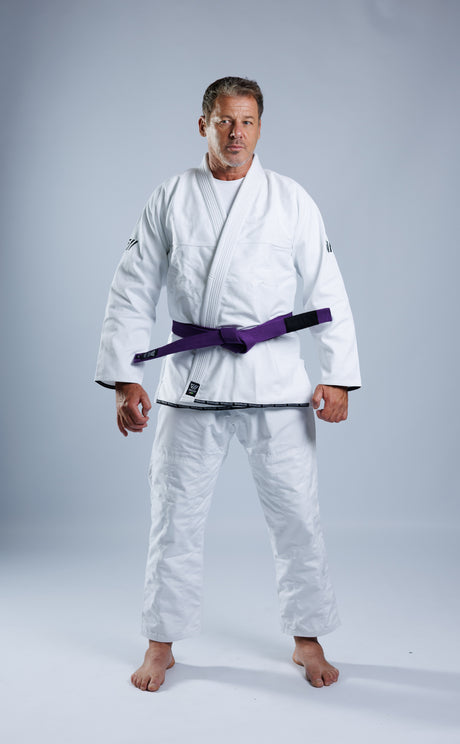
- White: The most traditional color, symbolizing purity and the martial arts roots of BJJ. It is universally accepted and often preferred by purists.
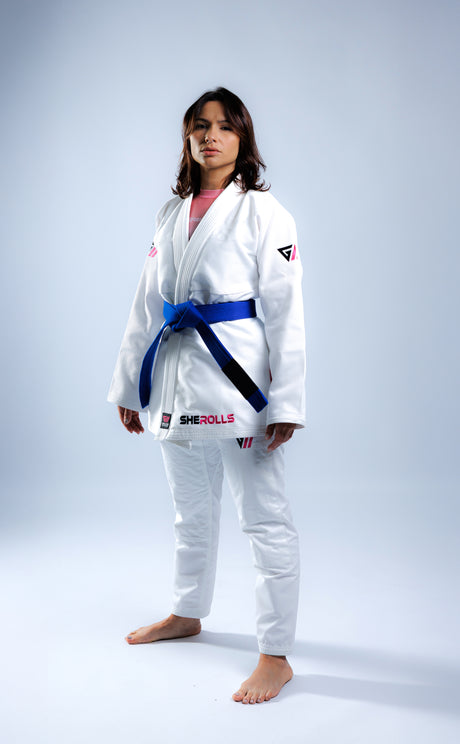
- Royal Blue: A color that has become a staple in BJJ, offering a classic and distinct look on the competition mat.
- Black: A popular choice for its sleek, imposing appearance, and its ability to hide minor scuffs and marks.
Crucial Competition Rule: While these three colors are permitted, competitors must wear gis of the same uniform color. For example, a royal blue jacket cannot be worn with black pants. Furthermore, the material and stitching of the gi must be a uniform color.
Small, subtle logos and patches are usually allowed, but must adhere to strict size and placement guidelines set by the governing body.
Ready to compete? Stock up on the official colors!
Shop All IBJJF Approved Gis at GeeBJJ.com
Gi Colors in the Academy: Freedom and Etiquette
When training at a local academy (often called a dojo or mat), the rules for gi color are significantly more relaxed and are typically set by the head instructor. Most academies allow the "Big Three" colors without question, but many also permit a wider spectrum of colors for everyday training.
Commonly accepted colors for training include:
- Navy Blue (a darker shade than competition royal blue)
- Gray/Silver
- Occasionally Military Green/Olive (more common in no-gi and specialized training environments, but sometimes accepted for gi training)
Academy Etiquette: It is always best practice to check with your professor or academy owner before purchasing a colored gi outside of the standard white, blue, or black.
Some traditional schools maintain a strict "white gi only" policy, especially for beginners or for specific ceremonies like belt promotions. This often reflects a desire to maintain a clean, uniform look and a focus on technique over flashiness.
The Tradition of the White Gi
The white gi holds a special place in the history of Jiu-Jitsu and Judo, from which BJJ originated. Historically, the white gi was the standard because it was easy to clean and bleach, symbolizing cleanliness and equality among practitioners regardless of social status.
- Purity and Cleanliness: A clean, white gi reflects respect for the art, the instructor, and your training partners.
- The Equalizer: In its most traditional sense, the white gi stripped away external identifiers, forcing focus purely on skill and effort.
While the modern BJJ world has embraced color, many practitioners still choose white as their primary training or competition attire as a nod to tradition.
Starting Your Journey?
Browse Our Selection of High-Quality White Gis for Beginners
Gi Color and Rank: A Note on Misconceptions
It is important to clarify that in Brazilian Jiu-Jitsu, the color of your gi has absolutely no correlation with your rank. Rank is exclusively denoted by the color of your belt (White, Blue, Purple, Brown, and Black). You will see white belts, blue belts, and black belts all wearing any of the approved gi colors.
Practical Considerations When Choosing a Gi Color
Beyond rules and tradition, there are practical reasons BJJ students choose certain colors:
|
Gi Color |
Pros |
Cons |
|
White |
Most traditional, universally accepted, easy to bleach and keep sanitary. |
Shows stains and sweat very easily; requires more frequent, thorough cleaning. |
|
Black |
Hides stains and dirt well; has a sharp, powerful aesthetic. |
Can fade over time with washing; tends to absorb heat more quickly. |
|
Royal Blue |
Approved for competition; a classic, aesthetically pleasing choice. |
Can show chalk/dust more easily than black; some schools may still prefer white. |
Find Your Perfect Fit and Color Today!
Explore Our Full Gi Collection at GeeBJJ.com
Learn more:
Top 5 Mistakes People Make When Buying a Gi
Best BJJ Gis for Beginners & Competitors